
Social Platforms Are Becoming Sales Conversations
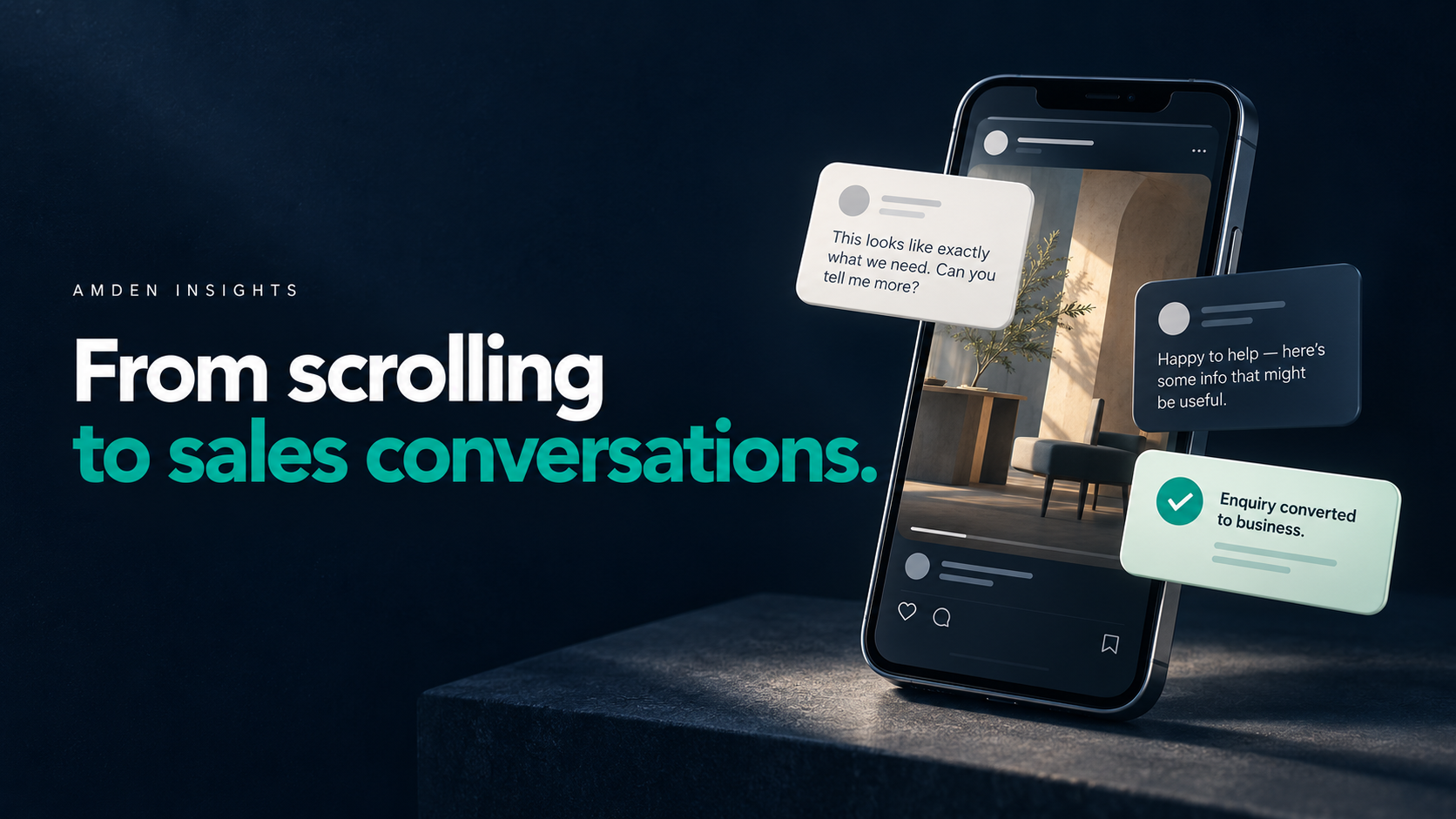
Social platforms are bringing discovery, customer questions and buying decisions closer together. Explore what this means for SMEs and how clear answers, useful content and stronger creator partnerships can turn attention into meaningful sales conversations.
What marketers should do as discovery, content and conversion move closer together
For years, the standard social media journey was simple: publish a post, earn attention, and send interested people somewhere else. A website, a shop, a lead form or an inbox did the heavier commercial work. That model is changing. This week's platform updates point to a more important shift than another new post format: social and discovery platforms are beginning to help people ask questions, compare options and decide what to do next without leaving the experience that caught their attention. The commercial lesson is straightforward. Content can no longer be planned as a separate awareness activity. It needs to be designed as the first step in a useful sales conversation.
The new journey starts with a question
Google is testing a business agent inside YouTube ads so shoppers can ask detailed product questions in the video environment. OpenAI is testing Sponsored Agents that let people move from an ad into a clearly labelled conversation with a business. Pinterest's new Visual Search Ads put brands in front of people while they are visually comparing ideas and products. [Source: Google agentic commerce] [Source: OpenAI advertising update] [Source: Pinterest Visual Search Ads] These products are at different rollout stages, and some are US-only. But they share the same design principle: reduce the gap between curiosity and confidence. This matters because most customers do not move from first impression to purchase in one clean jump. They hesitate. They compare. They wonder whether the service is suitable, how long it takes, what it costs, what proof exists, and what happens next. The brands that answer those questions clearly will be easier for both people and AI-led systems to recommend.
Creators are becoming repeatable media partners
TikTok and Amplify's new creator-led series initiative focuses on micro-dramas, interviews, game shows and docuseries rather than isolated sponsored clips. Meta's Creator Marketing Hub brings discovery, outreach, permissions, ad editing and amplification into a more connected workflow. Threads now gives podcasters profile banners, episode cards, reminders and performance insights. The direction is clear: a creator partnership is becoming less like renting a post and more like developing a small media property. For brands, that changes the brief. The useful questions are no longer only 'Who has the biggest audience?' and 'How many views did we get?' Better questions include: Can this creator host a recognisable series? Does the format make people return? Can the strongest episodes be amplified as ads? Are usage rights, editing rights and music clearance agreed? Does the content move viewers towards a real business outcome?
Subscription tools are becoming part of the marketing stack
Meta One brings verification, impersonation protection, profile enhancements, analytics, scheduling, team access and more business agent capacity into paid creator and business plans. Some features and prices vary by market and account. [Source: Meta One] This is not automatically a reason to add another subscription. It is a reason to audit the workflow. If a plan replaces separate tools, improves account access, reduces manual publishing or strengthens customer response, it may be valuable. If it merely adds novelty, it becomes another monthly cost without a measurable return.
What marketers should do now
- 1. Build a question bank before the content calendar. List the questions that prevent a prospect from enquiring or buying, then assign each one to a video, carousel, article, FAQ, creator brief or sales response.
- 2. Create a repeatable series, not a loose theme. Give it a name, host, structure, opening device and clear audience promise. Consistency should come from the format, not from repeating generic messages.
- 3. Treat creator rights as campaign infrastructure. Agree how long content can run, where it can be used, whether it can be edited, how paid amplification works and which measures define success.
- 4. Make product and service information machine-readable and human-clear. Accurate feeds, focused offer pages, structured FAQs, proof and clean tracking will matter more as AI systems mediate discovery.
- 5. Measure the conversation, not only the click. Track qualified questions, booked calls, saved posts, assisted conversions, repeat viewers and CRM progression alongside platform engagement.
The opportunity for SMEs
Large brands may be first into the newest betas, but SMEs have an advantage: they can answer customer questions with more specificity and move faster from insight to content. A founder can turn five recurring sales objections into a month of useful posts. A retailer can improve product data and create visual comparison content. A professional-services firm can build a short expert series that addresses the questions prospects are reluctant to ask on a discovery call. The winners will not be the businesses that automate the most. They will be the businesses that combine clear expertise, credible proof and fast, useful answers across every point of discovery.
Want help with this in your business?
Tell us where your business is today and we’ll point you towards the most practical next step.
Discuss Your Business
